Showing posts with label 2013-14. Show all posts

Tuesday, 21 January 2014

Is Juan Mata worth £37m?

On Monday evening, news broke that Manchester United were lining up a record-breaking bid for essentially the team who beat them on the weekend's reserve attacking midfielder, Juan Mata.

It was, by miles, the biggest piece of gossip of the January transfer window so far. United fans were sent to sleep dreaming of a player who holds the potential to resurrect their season.

The Guardian asked readers: Is Juan Mata worth £37m? 

It was a straight-forward question. But a complicated one that can be considered three ways: is he worth £37m to Chelsea, is he worth £37m to United, and is he worth £37m in today's hyper inflated transfer market?

The answer to the first part is a resounding no way José. This is a player who has started only half of the club's Premier League campaign and has been left out in crunch games. £37m is a considerable amount to reject for a sub.

Then there is the selling to a rivals argument: Chelsea shouldn't show the same reluctance as United displayed in the summer when they refused to sell them Wayne Rooney for any price. With United lingering in seventh place, Chelsea could hand over a vital weapon to be used to take points off their title rivals Arsenal and Manchester City, which could swing the championship race in their favour.

The answer to the second part is quite the opposite. Mata would be doubly as important to United than he is to Mourinho's Chelsea. If Mata can steer the defending league champions into fourth place, the only outcome that would constitute success of 2013-14, then he is undoubtedly worth the fee.

Finally, the third part assesses the player's individual quality, and there is no doubting Mata's credentials. This is a player who has been Chelsea's star performer across the past two campaigns, who has won nearly every trophy in football.

It is a deal that works for all parties. In a climate where Andy Carroll is worth £35m, Fernando Torres £50m, Edison Cavani £55m and - wait for it - Marouane Fellaini £27m, Juan Mata is surely worth £37m.

Tuesday, 17 December 2013

Trigger happy Premier League chairmen

With less than half of the unpredictable and fantastic 2013-14 Premier League season passed, one quarter of clubs have changed their managers. Four have been sacked while another departed by mutual consent.

As BT Sport battles with BSkyB for rights to televise matches, more and more money becomes invested in football, and thus the importance for clubs of guaranteeing success becomes ever more pronounced.

This season has seen chairmen crack down on their clubs' managers with unprecedented severity. They are no longer allowed a series of losses while the team adjusts to a new style of play. If a new swathe of players is brought in, they are expected to deliver instant results.

Failure to pass this latter test has resulted in, or at least contributed to, Sunderland and Tottenham departing with their bosses.

The media, this season, have too been faster than ever to shine their spotlight on an underachieving manager. Arsene Wenger was 'in crisis' after the opening day loss to Aston Villa. Andre Villas-Boas went from delivering modest success to leading the sack race in one heavy defeat by Manchester City.

In the weeks that followed it was David Moyes, after consecutive home defeats, whose credentials were being examined. Then Villas-Boas's Spurs lost 0-5 to Liverpool and was out of the job the following morning.

In a cooler, less trigger happy climate, any of the departed managers could still be in their jobs. Here's why the five who have gone should have remained:


Paolo Di Canio (Sunderland), sacked after five games
• Took the reins from Martin O'Neill, who left after winning only two points from a possible 24. Di Canio was an immediate hit, recording back-to-back wins against Newcastle and Everton, and eased Sunderland to safety over Wigan Athletic.
• The team was radically overhauled in the summer. Over a full team's worth of new recruits were brought it, and while the fiery Italian's widely maligned political views may have communicated the wrong message about Sunderland's brand, ultimately it was Di Canio's inability to embed them into a winning outfit which cost him.

Ian Holloway (Crystal Palace), resigned after eight games
• Won promotion from an especially competitive year in the Championship.
• Squad appeared to lack Premier League quality, and Holloway felt he wasn't the person to ensure top-flight survival.

Martin Jol (Fulham), sacked after 13 games
• Built a healthy squad of young and old players

Steve Clarke (West Brom), sacked after 16 games
• Led West Brom to their record points tally and an eight-place finish.
• Beat Manchester United away.

Andre Villas-Boas (Tottenham), sacked after 16 games
• Led Spurs to their record points tally (73).
• Sold a player for a world-record fee
• Left Spurs with the highest win percentage of all Spurs managers since 1899.

Monday, 16 December 2013

The Premier League's knee-jerk culture is growing out of hand

Andre Villas-Boas became this season's fifth Premier League manager to lose his job on Monday morning. Steve Clarke was the fourth, just two days earlier. The league is not yet at the halfway stage.

There are similarities between the two in the circumstances leading to their dismissals. Neither were abject failures; if anything, the opposite is true. Both led their sides to their clubs' highest ever points tallies in 2012-13. Villas-Boas was a point away from usurping Arsenal for fourth spot, while Clarke masterminded West Brom to a remarkable eighth-placed finish.

Spurs' total of 72 points was the most ever recorded by a team that finished outside the top four. They were edged by their north London rivals and Chelsea, who recorded 75 points. The manager had succeeded yet failed: Spurs chairman Daniel Levy's ambition of turning Spurs into a Champions League side would have to wait another year. Villas-Boas wasn't given the chance to better his total.

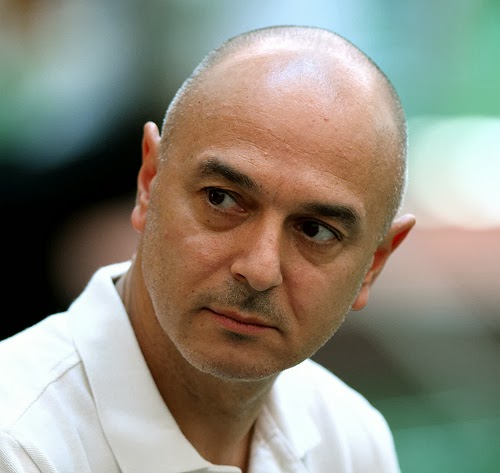
Daniel Levy fired AVB after only 16 games of the new season; photo by Doha Stadium Plus

West Brom finished one place below the 'super seven' last term. The points gap of 12 between them and Liverpool, who finished seventh, is so great that it could be said that West Brom under Clarke won a 'league of the rest'. To break the monopoly of those seven would be an achievement of staggering proportions.

The following campaign was destined to be tougher for both clubs as each lost their star player. Gareth Bale and Romelu Lukaku contributed 38 goals last term combined.

West Brom replaced Lukaku, a battering ram of a centre-forward who could finish too, with Victor Anichebe. It was a like-for-like swap in positional terms, yet a severe reduction in quality.

Spurs sold Bale, the league's most devastating attacking force since Cristiano Ronaldo, for a world-record £86m. They spent a large chunk of this on Erik Lamela, but expecting an immediate impact from a 21-year-old who just altered cultures is unrealistic. Meanwhile, Andros Townsend has been less productive than his eye-catching performances would suggest.

Spurs spent the remainder of this money, and £21m more, on six others. They were expected by Levy to go straight into the first team and deliver instant success. But settling so many players into a team takes time. Levy is not a former footballer and clearly does not appreciate this.

A manager should be allowed to finish the season. When the team has been totally overhauled, and is one point better off than at the same stage last season where they went on to record their highest ever points tally, the manager should be afforded until the season's end at least to achieve his goals.

Villas-Boas might have avoided the sack if he applied some damage limitation in matches against Manchester City and Liverpool. Steve Clarke might still be at West Brom if they had beaten Chelsea. These are such small margins. The knee-jerk reactions of Premier League chairmen, giving managers no room for failure, is getting out of hand.

Friday, 25 October 2013

Ashes: England win down under in 2010-11

The five Tests, each in 50 words

First Test: 25-29 Nov 2010, Brisbane, the Gabba
Test drawn after play on days 1, 2 and 4 was reduced due to bad light and/ or rain

Records and rain fell. Pete Siddle decimated England from 197/4 to 197/7 with a 26th birthday hat-trick. Australia struggled before Michael Hussey and Brad Haddin hit a Gabba-high 307 run sixth-wicket partnership. Andrew Strauss (110), Alastair Cook (235 not out) and Jonathan Trott (136 not out) topped it.

Second Test: 3-7 Dec 2010, Adelaide, Adelaide Oval
England won by an innings and 71 runs

Australia struggled as Simon Katich was run out before facing a ball, and captain Ricky Ponting went for a first-ball duck. Cook continued his magnificent form and Pietersen hit his Test highscore of 227. England declared on 620/5 and won their 100th Test over Australia with Graham Swann’s tenth five-wicket haul.

Third Test: 16-20 Dec 2010, Perth, WACA Ground
Australia won by 267 runs

England’s only blip. After two Tests of batting excellence, they managed only 187 and 123. Mitchell Johnson was brought in by Australia to stop England, but it was Ryan Harris who cut them down to size with figures of 6/47. Johnson (62) ended up top scoring in the first innings.

Fourth Test: 26-30 Dec 2010, Melbourne, Melbourne Cricket Ground
England won by an innings and 157 runs

England, back on form, retained the Ashes. Australia yielded only 98 in their first innings, their lowest MCG total, and all ten wickets were behind the stumps catches. England responded with 513 – Jonathan Trott hitting 168 not out – despite Peter Siddle taking 6/75. The 415 run deficit was too great.

Fifth Test: 3-7 Jan 2011, Sydney, Sydney Cricket Ground
England won by an innings and 83 runs

Australia’s batting woes were highlighted when Johnson top scored again in the opening innings. England amassed 644 in response, with 189 from Cook, who earned the man-of-the-series award for his 766 runs. James Anderson took 7/127 across Australia’s two innings. It was England’s first Ashes win down under since 1986/87.